
Bloom
Bloom emerged from the intersection of Immersive Media and Environmental Science. By combining research with interactive media, the project explores how jellyfish can serve as nature’s warning lights. Through layered visuals, immersive elements, and experiential storytelling, Bloom invites audiences to engage with the fragility of ecosystems and the silent signals of the natural world, turning observation into a tangible, memorable experience.
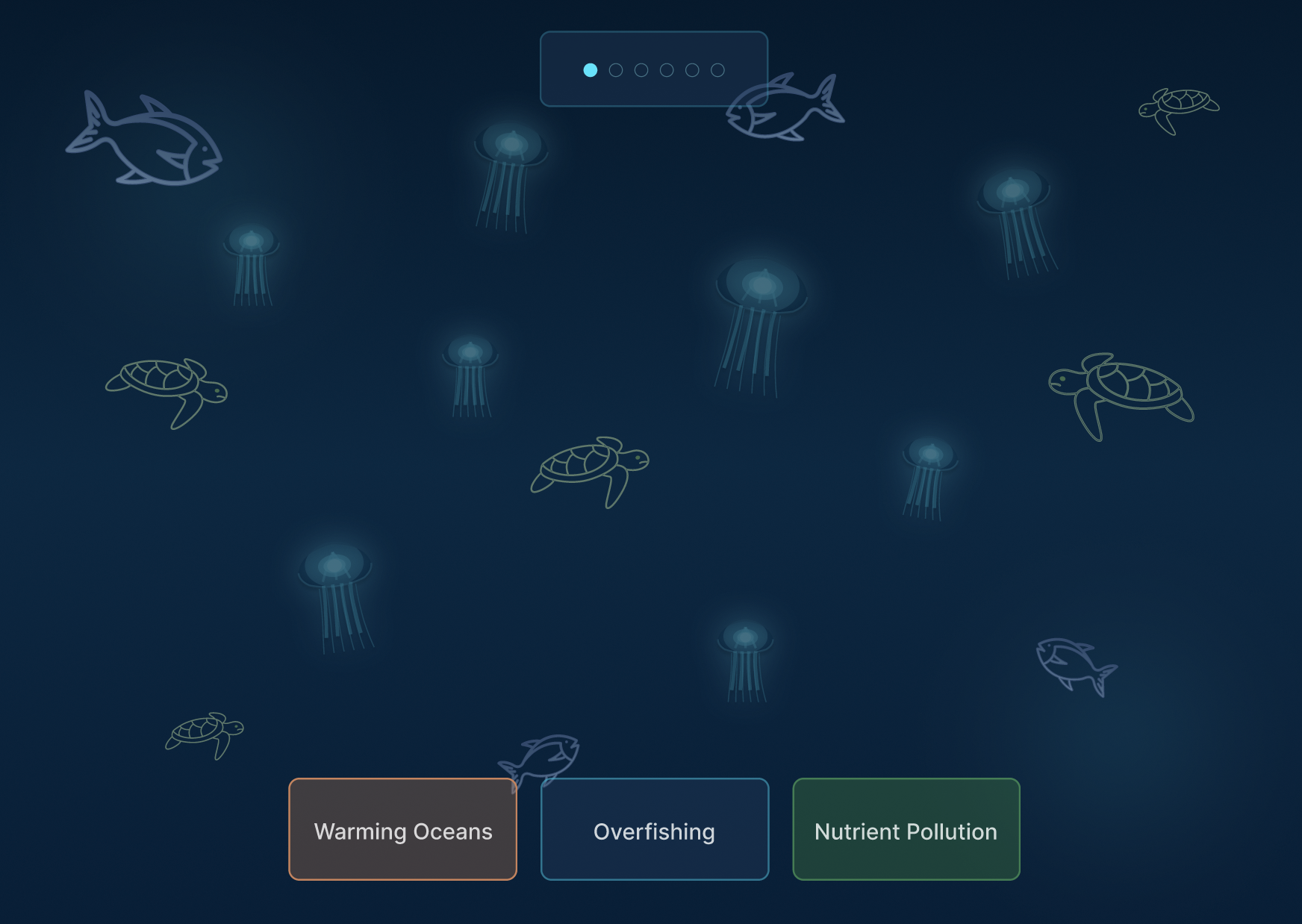
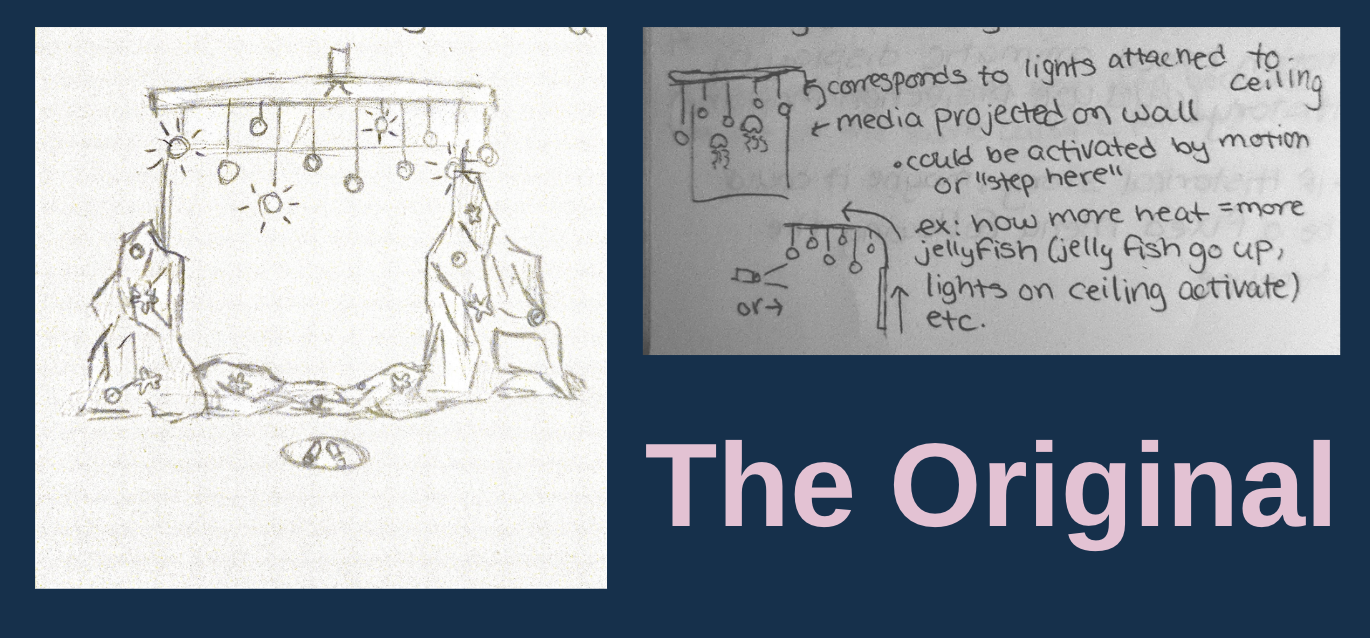
The Original: Warning Lights
In Environmental Science, I was tasked with creating an exhibit for Mote Aquarium and Laboratory, and I approached the project with excitement, proposing multiple ideas that included AR experiences and interactive digital media. After feedback, I focused my research on jellyfish blooms and their role as indicators of ocean health, exploring how changes in their populations can reveal the impacts of environmental stress. My concept became an interactive media experience displayed on a tablet in front of the Moon Jelly tank, designed to engage visitors directly with the science behind the blooms. Using Figma, I designed and coded a functional prototype that allows guests to manipulate environmental factors and observe how these changes affect jellyfish populations, turning learning into an immersive, hands-on experience that connects audiences to the delicate balance of marine ecosystems.
To witness the prototype yourself please click here:
Version two: Bloom
In Immersive Media, I had the opportunity to revisit this concept and transform it into a fully immersive exhibit for Mote Aquarium and Laboratory. My original design felt too large and reminiscent of Mote before its reconstruction, and it wouldn’t fit within the museum’s current space. The challenge was to preserve the story and educational impact of the jellyfish bloom while creating an experience that fully engaged guests. By reimagining the exhibit at a human scale and integrating fiber optic lights and digital media, I aimed to immerse visitors in the life and patterns of the jellyfish population, allowing them to connect with the delicate balance of the ocean environment in a meaningful, memorable way.
The Story
The Earth does not shout when it’s hurting, it shifts. When the oceans grow warmer, jellyfish bloom in great, drifting swarms, thriving where other life struggles. Their sudden abundance is not just a spectacle but a signal, soft and luminous; they remind us that the planet speaks in patterns, and if we pay attention, we can see the warning rising with the tide
The Process
From determining scale and design style to crafting the interactive media itself, I focused on visually representing jellyfish blooms in a way that allows guests to see their spread and understand the environmental factors behind them. Every element of the design is intended to make the patterns and behavior of the jellyfish tangible, turning abstract scientific concepts into an immersive, engaging experience that connects visitors to the delicate balance of ocean ecosystems
Scope of Work
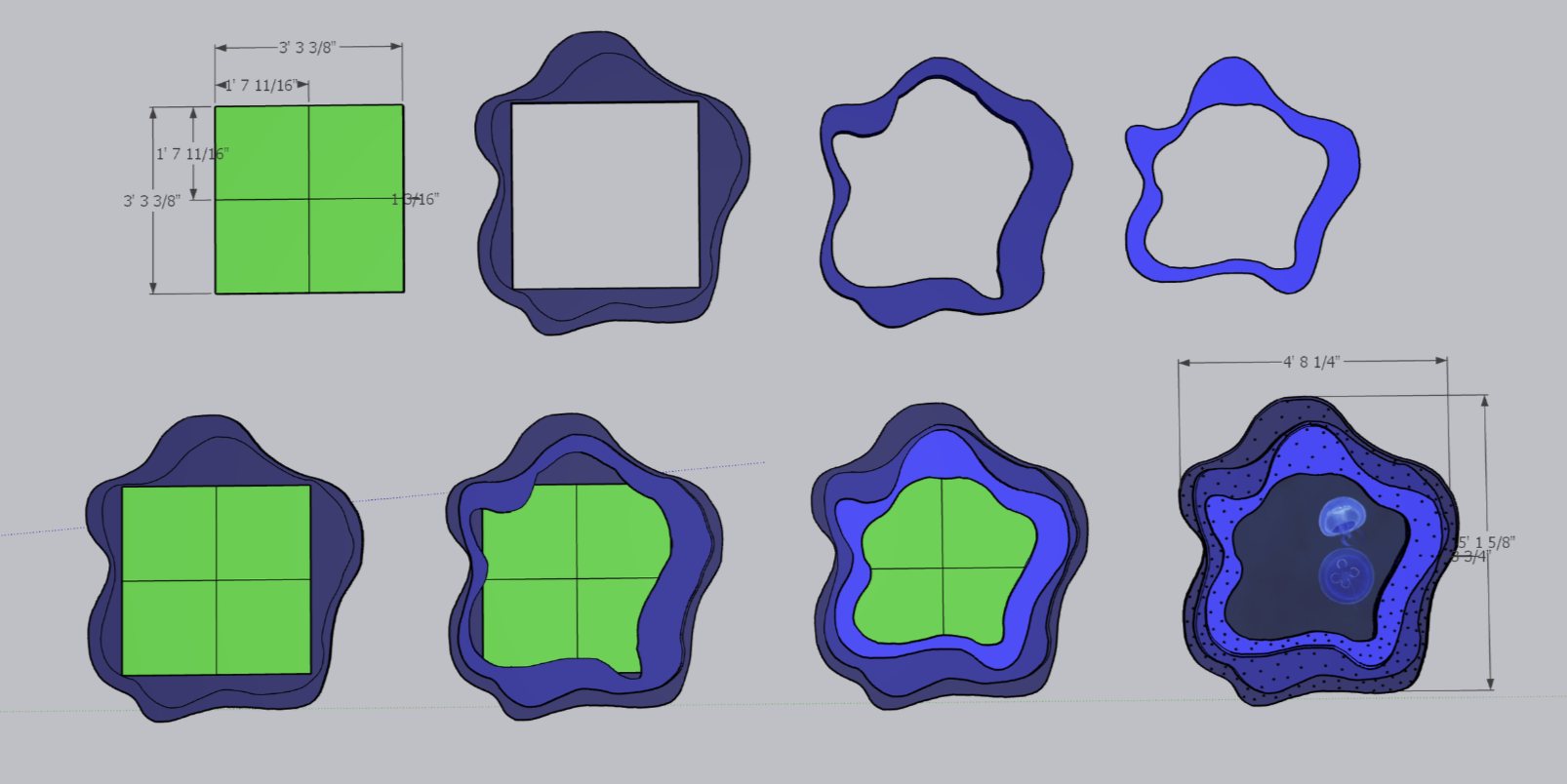
The objective of this project is to create an engaging exhibit that demonstrates how jellyfish populations serve as indicators of ocean health, raising public awareness and inspiring environmental stewardship. The scope includes the design and fabrication of a three-tiered, 5' x 5' wall-mountable exhibit accompanied by a 30-second video. The exhibit will integrate four 3' 3 3/8" P2.976 LED panels with a dedicated LED panel controller and wall mount system, along with 231 fiber optic strands and three machined PVC foam board layers to create a dimensional, visually compelling display. All work will be executed within a total project budget of ~$10,000.
Designing the Media
This project was an opportunity to expand my creative and technical skill set, pushing me to explore new tools and techniques. I learned how to roughly animate sequences using Procreate, translating hand-drawn motion into a dynamic visual narrative. I also experimented with video textures in Enscape, integrating moving imagery seamlessly into a 3D environment to enhance immersion and storytelling. These skills allowed me to bring the jellyfish bloom to life in a more vivid and interactive way, deepening both the educational and experiential impact of the exhibit while broadening the ways I approach design across digital and spatial media
Storyboards
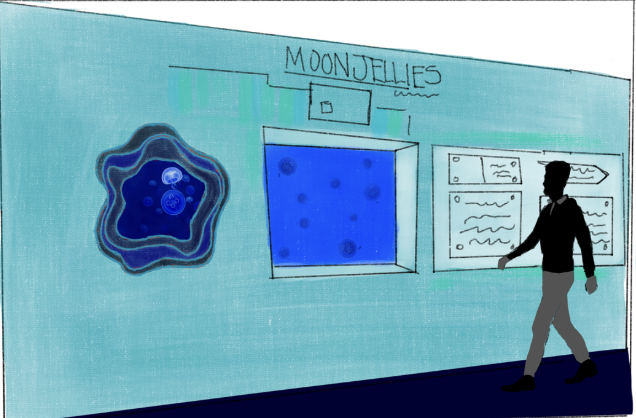
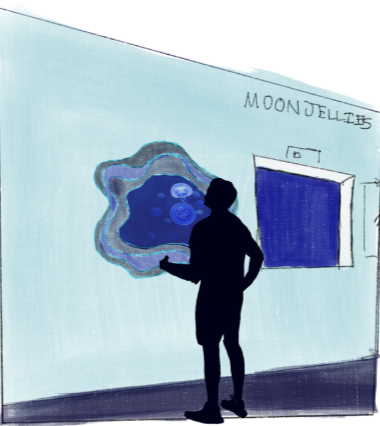

Phases of Light
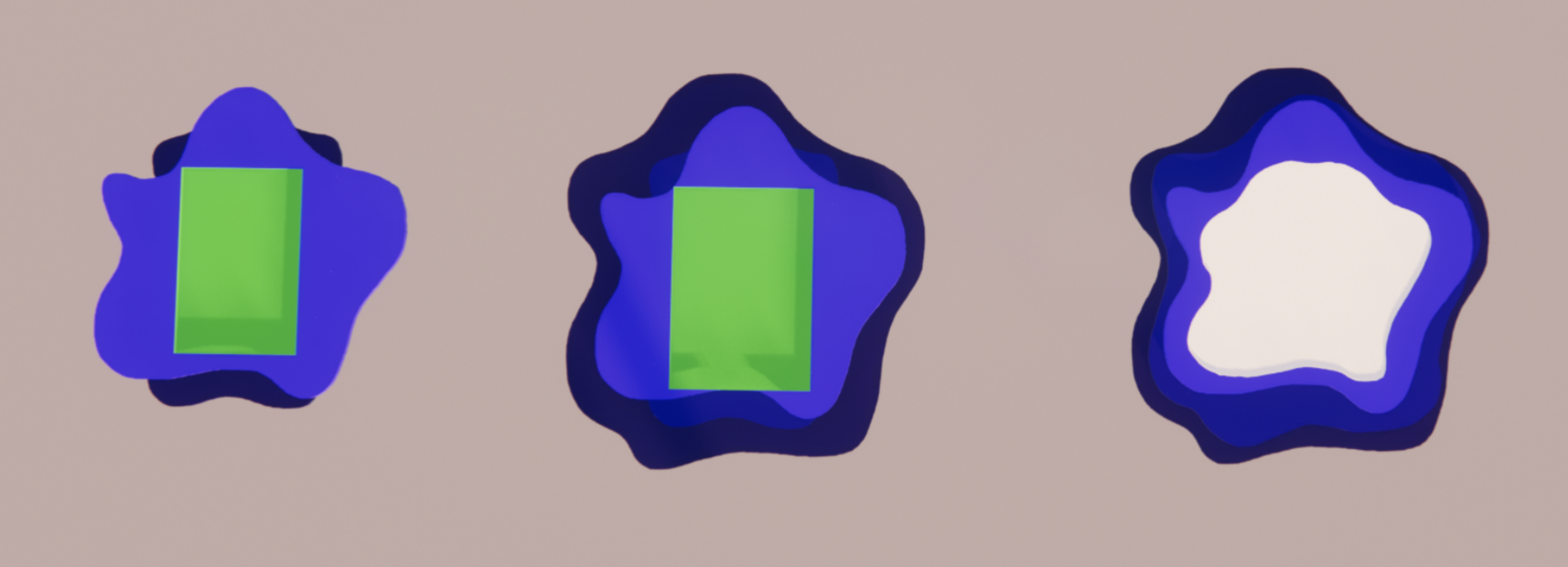
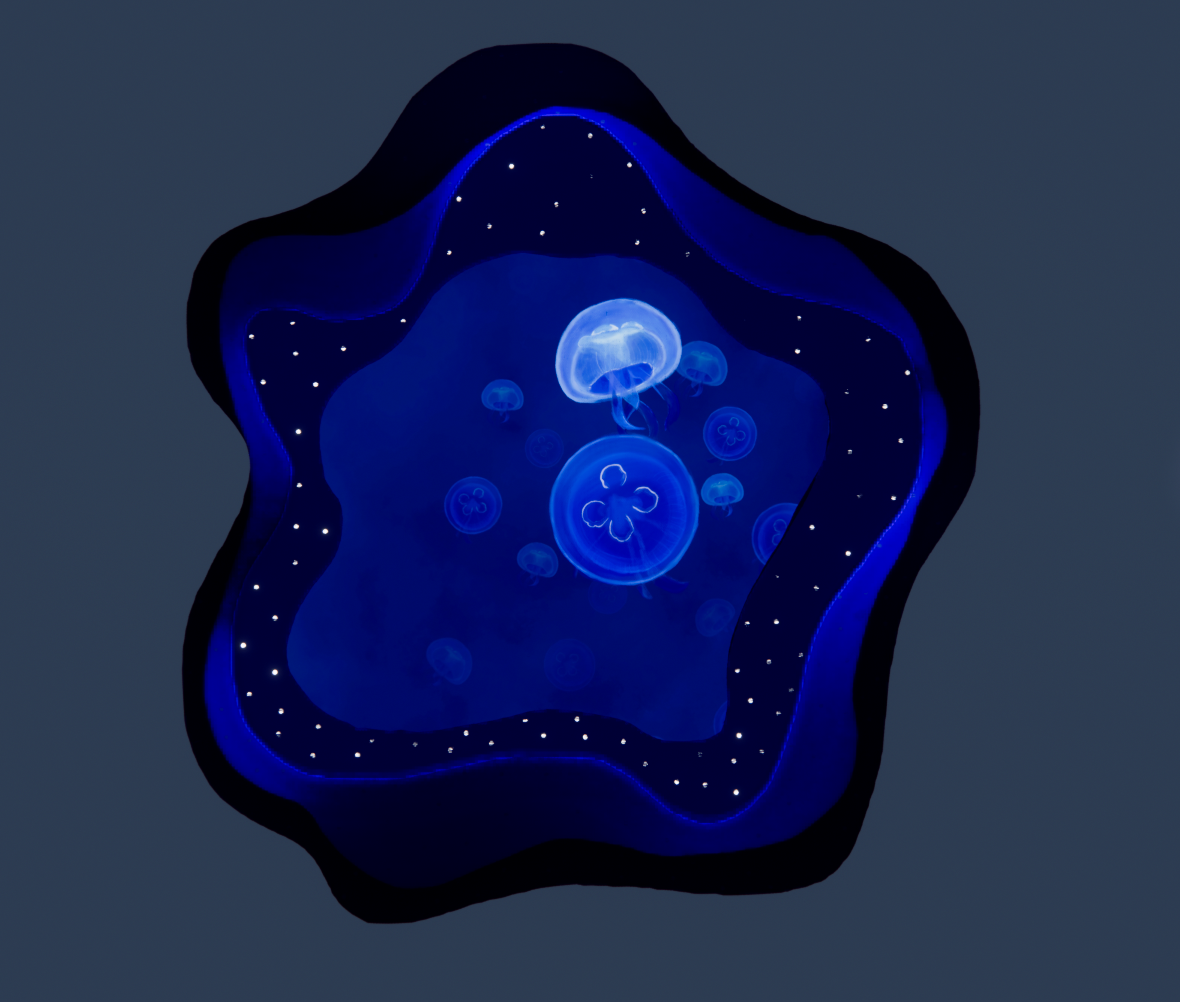
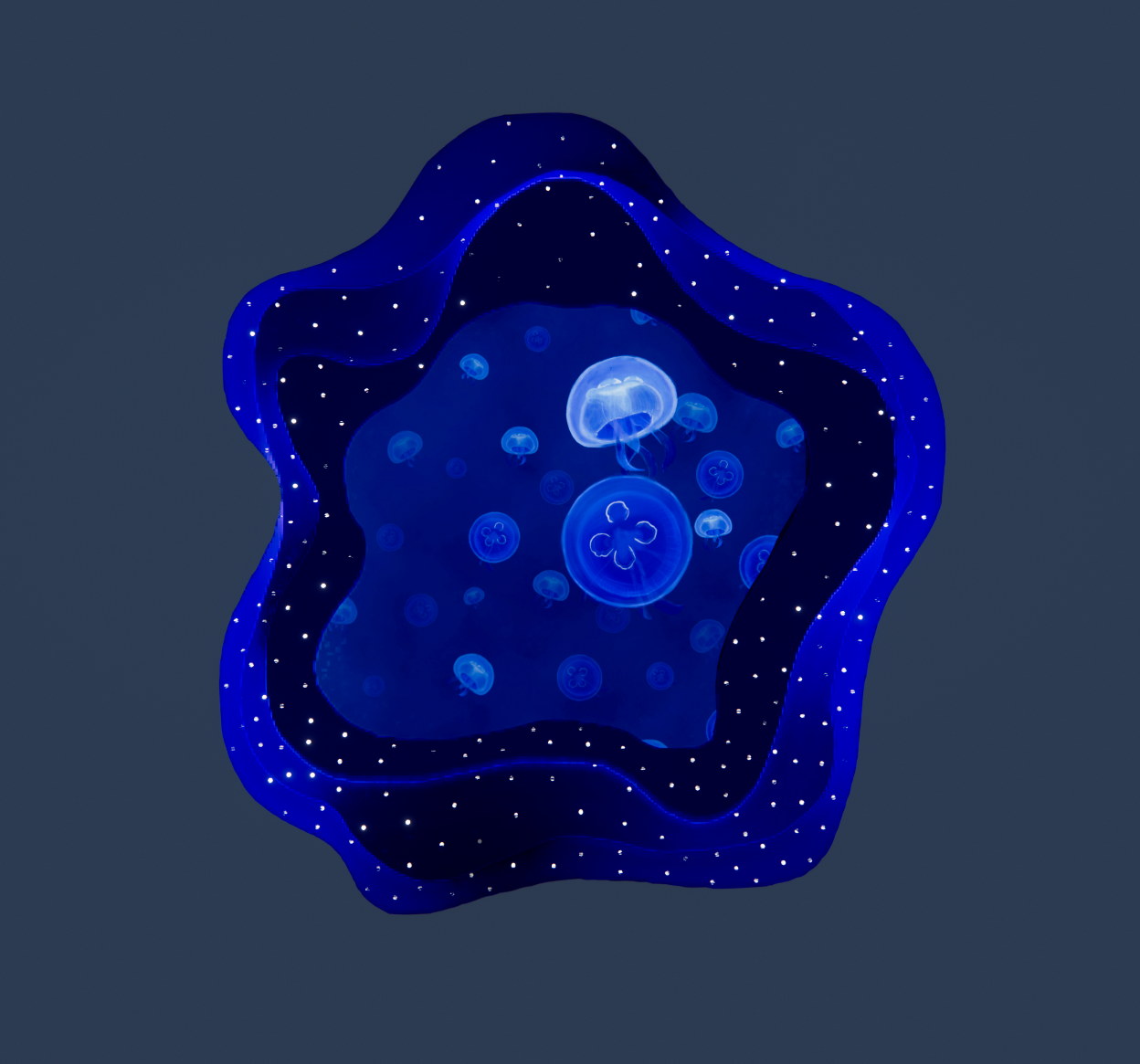
Three layered phases of light guide the guest through the progression of the jellyfish bloom, physically extending the experience beyond the screen. As the bloom increases within the media, light activates layer by layer in the surrounding space, mirroring the growth of the population. Rather than shifting in color, the illumination builds in density and reach, allowing guests to witness the spread in a tangible way. Each phase corresponds directly to the intensifying bloom, helping visualize how quickly and quietly it can expand into its environment.
Bloom
In partnership with Mote Marine Aquarium, Bloom is a sign-scale exhibit that transforms ocean warming data into a focused physical experience. The installation features a shrouded LED screen framed by three sculptural layers inspired by ocean splashes, each embedded with fiber-optic lighting that gradually illuminates to represent the increasing amount of jellyfish in these blooms linked to rising ocean temperatures.
Activated by the push of a button, the media sequence begins with a sparse marine scene that progressively fills with more and more jellyfish, accompanied by descriptive text explaining the ecological imbalance behind the shift. As the on-screen bloom intensifies, the surrounding fiber optics glow more densely across the layered structure, extending the phenomenon beyond the screen and into the physical form. By combining real research with atmospheric design, the exhibit allows visitors to witness one of the ocean’s quiet warnings and learn how environmental change reveals itself through nature